 License:PA072883



How Much Hail Damage Equates
to Siding Replacement?
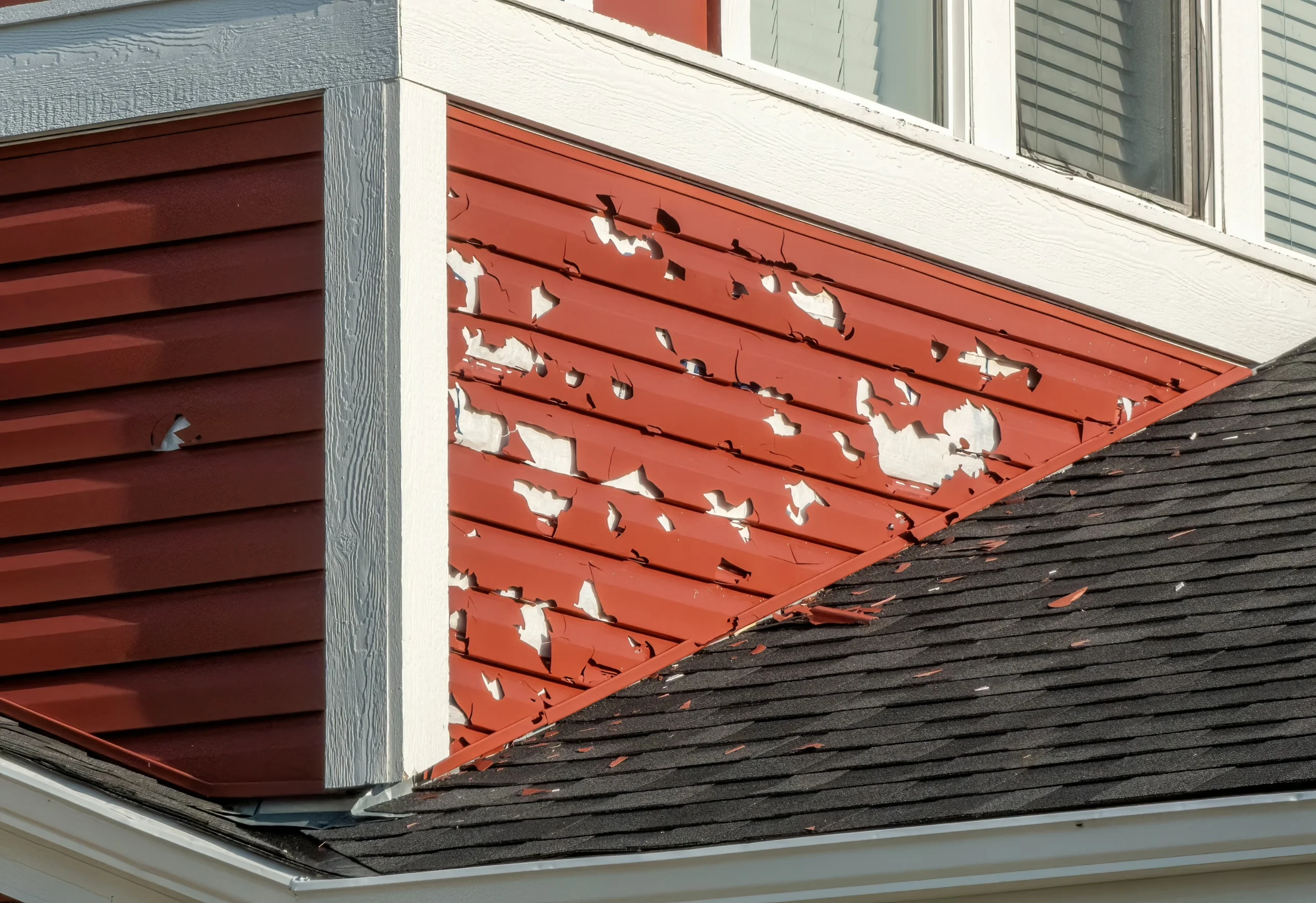
A hailstorm rolls through southeastern Pennsylvania, the ice melts within the hour, and by morning your yard looks fine. Then you walk the side of the house that faced the storm and start counting dents. Now comes the real question: is this cosmetic, or is this a siding replacement?
At RAM Roofing & Exteriors, we inspect storm damaged homes across Bucks, Montgomery, and Chester Counties every season, and the honest answer is that it depends on three things: the size of the hail, the material on your walls, and how concentrated the impacts are. This guide walks through all three, plus how insurance actually treats hail damaged siding, so you can make a smart call before you file anything.
What Hail Actually Does to Siding
Hailstones range from pea sized to golf ball sized and beyond, and each material on your home reacts differently to the impact.
- Vinyl siding cracks and chips, especially in cold weather when the panels are brittle. A crack in vinyl is not cosmetic. It lets water behind the panel, and that moisture works on your sheathing every time it rains. Our vinyl siding team sees far more hidden water damage from "small" cracks than homeowners expect.
- Aluminum siding dents rather than cracks. It usually keeps shedding water, but dents are permanent, they never pop back out, and heavy denting across a whole wall drags down curb appeal and resale value.
- Fiber cement siding is the toughest of the three and shrugs off most hail. It takes large stones to chip or fracture it, which is one reason HardiePlank siding is a popular upgrade for homeowners who have been through a hail claim once and never want to do it again.
Storm direction matters too. Wind driven hail almost always hammers one or two elevations of the house while leaving the others untouched. That is completely normal, and it is a detail your insurance adjuster will pay attention to.
How to Spot Hail Damage on Your Siding
Wait until the storm has fully passed, then walk the exterior with your phone and take photos of anything that looks off. Here is what to look for:
- Circular or half moon shaped dents, often in a random scatter pattern rather than a straight line
- Cracks that spread out from a central impact point, like a spiderweb
- Chips or holes, especially along the bottom edges of panels where they are unsupported
- Black streaks or exposed substrate where the finish was knocked off
- Matching damage nearby: dented gutters, downspouts, window wraps, or a torn window screen usually confirm hail rather than an impact from a mower or a ball
Late afternoon light hitting the wall at an angle reveals shallow dents that are invisible at noon. And check up high, not just at eye level. If you are not comfortable judging what you see, we offer complimentary roof inspections with a detailed written estimate, and our inspectors document siding, gutters, and windows at the same visit. You get photos and a straight answer, not a sales pitch.
So How Much Damage Actually Means Replacement?
There is no magic number of dents, but after years of storm work we can give you a practical threshold:
- Repair territory: a handful of cracked or chipped panels confined to one small area, with no water staining behind them. Individual panels can be swapped, and aluminum or fiber cement often allow even more localized fixes.
- Replacement territory: punctures, deep cracks across multiple panels, damage spread over a full elevation, or brittle older vinyl that shatters when a technician tries to unlock a panel. At that point, patching costs more in the long run than doing it right.
There is one more wrinkle that surprises homeowners: color matching. Vinyl fades in the sun, so a brand new panel installed next to fifteen year old siding sticks out badly, and many older profiles are discontinued entirely. That is why insurers often approve replacing a full side of the house, or in some cases all the siding, even when only a portion took hits. We always tell homeowners the truth about which side of the line they are on. If a repair will genuinely solve it, that is what we recommend. No unnecessary replacements, ever.
Hail Size and What It Usually Breaks
As a rough field guide from the storms we have worked:
- Pea to dime sized (under 3/4 inch): rarely damages siding, but can bruise asphalt shingles and strip granules
- Quarter sized (1 inch): dents aluminum, cracks cold or aged vinyl, damages gutters and window wraps
- Golf ball sized (1.75 inches): cracks healthy vinyl, punctures aluminum, chips fiber cement, breaks window glass
- Larger than golf ball: widespread exterior damage is likely, and the roof almost certainly took it worse than the walls
That last point matters. Hail rarely damages siding without damaging the roof first, since the roof catches every stone while walls only catch wind driven strikes. If your siding shows impact marks, get the roof looked at before you file anything, so the claim covers everything in one pass. Depending on what we find, that can mean targeted roof repairs or, for widespread granule loss and bruising on an aging roof, a full roof replacement. As a certified Owens Corning installer, we replace roofs to manufacturer standards, which protects your warranty as well as your home.
Check the Rest of the Exterior Too
While you are walking the house, look past the siding. Hail that is big enough to crack panels usually leaves a trail:
- Gutters and downspouts dent easily and are one of the first things adjusters check. Crushed or split gutters stop moving water away from your foundation, which is a bigger problem than the dents themselves.
- Windows take hits on the glass, frames, and seals. Cracked panes and bent frames can often be handled as window repairs, while shattered or fogged units call for replacement windows. Plenty of homeowners use a storm claim as the push to upgrade to energy efficient vinyl window replacements, and our crew handles window installations from measurement to the final bead of caulk.
- Entry and storm doors dent and crack just like siding. Damaged units are usually covered under the same claim, and we install replacement doors alongside siding work all the time.
And if the storm left an actual hole in your home, a broken window, a punctured wall, or roof damage that is letting water in, do not wait for business hours. Our emergency home repair team responds around the clock to tarp, board up, and stabilize storm damage before it gets worse.
How Insurance Handles Hail Damaged Siding
Most homeowners policies in Pennsylvania and New Jersey cover hail as a named peril, but how the claim plays out depends on the details:
- Deductible math: if the total repair cost barely clears your deductible, filing may not be worth it. A written estimate before you call the insurer tells you whether the claim makes financial sense.
- Elevation by elevation payouts: many policies pay to replace only the damaged sides of the home, and some require multiple impacts within a concentrated test area to qualify.
- Matching provisions: when your siding color or profile is discontinued, some policies include language that extends coverage so the finished home looks uniform. This is exactly the kind of clause that gets missed when nobody advocates for you.
- Time limits: policies typically give you a limited window after the storm date to file, often around a year, so do not sit on visible damage.
This is where working with a contractor who handles claims every week pays off. Our insurance restoration team documents the damage the way adjusters expect to see it, meets the adjuster on site, and makes sure the scope covers everything the storm actually hit, not just the most obvious dents.
What Siding Replacement Costs
Full vinyl siding and trim replacement averages somewhere around $14,000–$28,000, with real world projects ranging from roughly $10,000 for a smaller vinyl home up to $50,000 or more for fiber cement on a larger house. Material, home size, the number of stories, and trim complexity all move the number. When insurance approves the claim, your out of pocket cost is typically just your deductible. When damage falls short of a claim, or you decide to upgrade beyond what insurance pays for, flexible financing options can spread the investment into manageable monthly payments.
Serving Storm Damaged Homes Across Southeastern PA and NJ
RAM Roofing & Exteriors is based in Doylestown, but our crews handle hail and storm damage across the whole region, including Bucks County, Montgomery County, Chester County, Delaware County, Berks County, and Lehigh County in Pennsylvania, plus Hunterdon, Warren, and Mercer Counties in New Jersey. After a storm cell tracks through towns like Warminster, Quakertown, Lansdale, Collegeville, Pottstown, or Downingtown, we are often inspecting homes in the neighborhood within days. You can see the full list of communities we cover on our service areas page.
Why Homeowners Trust RAM With Hail Claims
- Complimentary inspections with detailed written estimates, so you know exactly what you are dealing with before you decide anything
- Around the clock emergency storm damage response
- Honest, repair focused recommendations. If you do not need a replacement, we will tell you.
- Fully licensed and insured in Pennsylvania and New Jersey (PA072883 and NJ 13VH11020800)
- A 4.9 star Google rating from more than 200 homeowners
- Certified Owens Corning roofing installer, with work backed by manufacturer standards
You can read what your neighbors have said about working with us on our testimonials page, or learn more about the team on our about us page.
Frequently Asked Questions
Will insurance replace all my siding if only one side was hit?
Sometimes. Many policies pay per damaged elevation, but if your siding color or profile cannot be matched, matching provisions in some policies extend coverage so the home looks uniform. It depends on your specific policy language, which is why we review the scope with you before work begins.
Can I just repair a few damaged panels instead of replacing?
If the damage is limited and your siding is a current, matchable product, yes, and that is exactly what we will recommend. The complication is fading: sun exposure changes vinyl color over time, so new panels beside old ones can be very noticeable, and discontinued profiles sometimes cannot be sourced at all.
How long do I have to file a hail claim?
It varies by policy, but many insurers set a filing window of around a year from the storm date, and documenting damage promptly always strengthens a claim. If you suspect hail damage, get it inspected and photographed now, even if you are not sure you will file.
Does hail damage to siding usually mean roof damage too?
Almost always. The roof takes direct vertical hits from every stone, while siding only catches wind driven strikes. If your walls show impact marks, have the roof inspected before filing so the entire loss goes into one claim.
Do you charge for storm damage inspections?
No. Our inspections are complimentary and come with a detailed written estimate and photo documentation you can use for your insurance claim. You can find more answers on our FAQ page.
Get a Free Hail Damage Inspection
If a storm has come through and something on your exterior does not look right, do not guess. Call or text RAM Roofing & Exteriors at (215) 315 - 7700, any time, day or night, or contact us online to schedule your free inspection. We will tell you honestly whether you are looking at a quick repair, a legitimate insurance claim, or nothing to worry about at all.