 License:PA072883


Why Roofing Quotes Vary So Much: $8K vs. $25K for the Same Roof
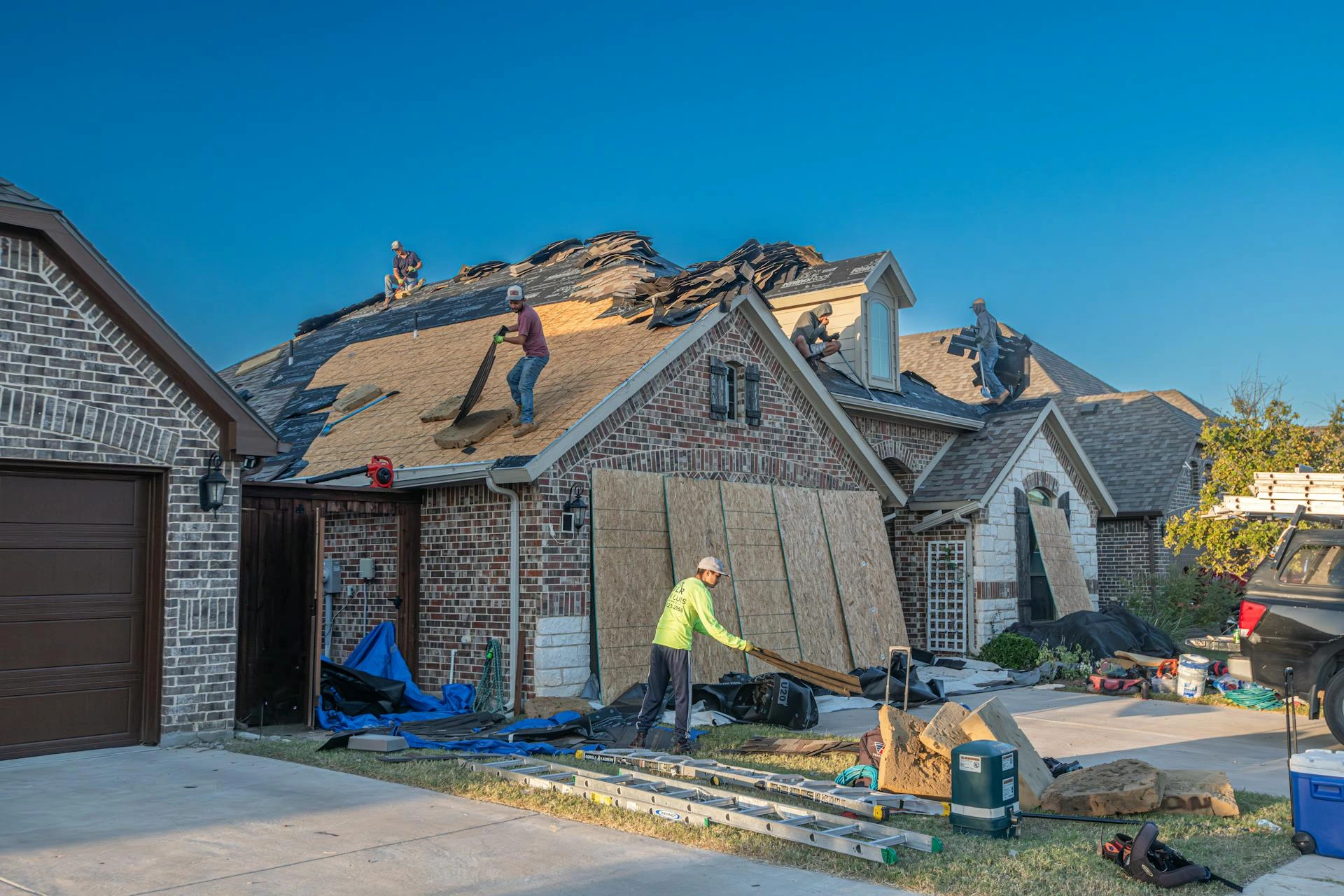
You called three roofers. Same house. Same roof. Same conversation. Then the quotes came back:
- Contractor #1: $8,400
- Contractor #2: $14,900
- Contractor #3: $24,800
Now you're staring at a spreadsheet wondering who's lying — the cheap guy cutting corners, or the expensive guy ripping you off. The truth is messier and a lot more useful to understand: in roofing, the three contractors are rarely bidding the same job, even when you described the same job. Below is what's actually behind a spread that wide, and how to figure out which number and contractor to trust.
This isn't a pricing breakdown — there are plenty of those online, and you can also run our online instant roof quote if you want a quick ballpark before you read further. This is about decoding three estimates that don't agree.
The Big Idea: A "Roof" Isn't One Product
When you buy a car, "Toyota Camry" means the same thing to every dealer. "New roof" doesn't. It's closer to "new kitchen" — the words describe the category, not the spec. Two contractors can stand on your driveway, look at the same square footage, and walk away with completely different mental images of what they're going to build.
That's why the prices diverge before anyone even sharpens a pencil. So let's go through the real reasons.
1. They're Not Actually Bidding the Same Scope of Work
This is the single biggest reason quotes vary, and it's almost always invisible in the dollar total. One quote might include full tear-off, new underlayment, new flashing, new pipe boots, new ridge vent, and disposal. Another might be quoting shingles installed over your existing roof with the old flashing reused.
You're not comparing two prices for the same thing. You're comparing two completely different jobs that happen to end with shingles on a house.
Ask every contractor: "Walk me through every line item — what exactly is being removed, what's being installed, and what's being reused?" A real estimate has line items. A vague total in three sentences is a warning sign, not a deal.
2. "Asphalt Shingles" Hides a 2x Price Gap
Both quotes say "architectural asphalt shingles." Cool. Which line? Which manufacturer? Which wind rating? Which warranty?
A builder-grade three-tab shingle is a different product from a heavy architectural shingle from a tier-one manufacturer. The visual difference on day one is small. The performance difference over twenty Pennsylvania winters is enormous — granule retention, wind resistance, the way the asphalt holds up through freeze-thaw cycles.
If one quote spec'd a premium architectural shingle and another spec'd whatever's cheapest in the warehouse, you have a real reason for a multi-thousand-dollar gap right there. And the cheap option will tell on itself five to ten years in.
We install Owens Corning systems because we're an Owens Corning Preferred Contractor — which matters less because of the badge and more because the certification ties workmanship to a manufacturer-backed warranty that uncertified installers literally cannot offer you. Worth asking each contractor: "What's the exact manufacturer warranty I get, and can you provide it given your certification level?"
3. Tear-Off vs. Roof-Over
Layering new shingles over old ones is cheaper. It's faster. It saves on dumpster and disposal fees. It also locks in any problems hiding under the old roof — rotted decking, failed flashing, water-damaged wood — and shortens the lifespan of the new shingles because the underlying surface isn't flat anymore.
Pennsylvania code in most municipalities limits how many layers you can have. And nearly every manufacturer warranty requires a clean deck for full coverage.
A $7,000 roof-over and a $15,000 full tear-off and replacement are not the same product. They will not last the same number of years. The cheap quote often isn't comparing apples to apples — it's comparing apples to a sandwich.
For more on what's actually involved when you go through a full replacement, request a free estimate on our roof replacement service page.
4. The Decking Question (This One Bites a Lot of Homeowners)
Once the old shingles come off, the contractor can see your roof decking — the plywood or OSB under the shingles. In an older home, especially after years of small leaks, there's almost always some rot.
Here's where the quotes really separate:
- Some contractors include a small wood allowance (say, two to four sheets of replacement plywood) in the base price and only charge extra if it's worse than that.
- Some contractors quote zero wood replacement and bill every single sheet as an extra after they tear off your roof. This is how a $9,000 quote becomes a $14,000 bill.
- Some contractors quote generously for wood replacement upfront so they don't have to surprise you, and the total looks higher on paper.
All three are legitimate ways to price the job. But if you don't ask, you'll only find out which one you signed up for after the crew is already on your roof and the wood is exposed.
Ask: "What's your decking policy? How many sheets are included, what's the per-sheet rate for additional, and how do I authorize that?"
5. The "Accessories" Gap
This is where cheap quotes hide most of their savings. The shingles are the visible product. Underneath them is a whole system that determines whether your roof lasts:
- Underlayment — synthetic vs. felt is a meaningful price and performance difference.
- Ice and water shield — required at eaves and valleys in PA to prevent ice-dam leaks. Some bids skip it or use the minimum.
- Flashing — chimneys, skylights, valleys, sidewalls. Reusing old flashing is cheaper. New custom-bent flashing lasts decades longer.
- Ventilation — proper intake and exhaust ventilation isn't optional. Poor ventilation cooks shingles from below and voids most manufacturer warranties. Some bids reuse old, undersized vents.
- Drip edge, starter strip, ridge cap — these are small line items individually but together they can swing a quote by $1,000+.
Two quotes for "an asphalt shingle roof" might be installing entirely different systems underneath the shingles. The price gap is real because the roof you're getting is different.
6. Workmanship Warranty (Read the Length Carefully)
The manufacturer warranty covers the shingles. The workmanship warranty covers the installation — and installation is what fails first on most roofs.
You'll see workmanship warranties ranging from "one year" to "lifetime." A contractor offering a one-year workmanship warranty is essentially telling you they're not confident the roof will hold up beyond that. A contractor offering ten, fifteen, or lifetime workmanship coverage is putting their name on the line.
With RAM's Owens Corning Preferred Protection System warranty, the shingle manufacturer actually stands behind our workmanship — and should there ever be a workmanship issue, you have the assurance that Owens Corning will take care of any issues if necessary.
This is also where the cheapest bid often gets quietly exposed. If a contractor isn't going to be around in three years, what is their workmanship warranty actually worth?
7. Insurance, Licensing, and Overhead
A legitimate Pennsylvania roofing contractor carries a PA Home Improvement Contractor license, general liability insurance (often $1M+), and workers' compensation insurance. That alone costs tens of thousands of dollars a year before they nail down a single shingle.
A "guy with a truck" can quote $4,000 less on your job because he doesn't carry any of that. If one of his workers falls off your roof and he doesn't have workers' comp, the liability comes back to the homeowner. That's not a rare scenario — it's the most common reason an uninsured roofer is so much cheaper.
Verify the license number and ask for a current certificate of insurance. RAM Roofing & Exteriors carries PA License PA072883 and NJ License 13VH11020800, and we'll send proof of insurance before the contract is signed — every reputable contractor will do the same if you ask.
8. Commission Structures (The Hidden Markup)
This one rarely gets discussed but it explains a lot of the high end of the price spread. Many roofing companies pay their salespeople a percentage of the total job — sometimes 10–20%, sometimes a cut of the profit margin on top.
That means the person at your kitchen table is incentivized to write the biggest number you'll accept. The job itself doesn't cost any more to build. The price is just higher because there's a commission baked into it.
This is why "the most expensive quote must be the best one" is often wrong. The most expensive quote sometimes just means the most aggressive sales structure.
So Which One Do You Actually Trust?
Cheapest isn't automatically a scam. Most expensive isn't automatically quality. Here's the framework that actually works:
1. Throw out the bottom quote until proven otherwise. Ask the cheap contractor exactly what they're including. If they can't itemize underlayment, flashing, ventilation, decking policy, and warranty in writing, you're not getting a roof — you're getting a layer of shingles on a future problem.
2. Throw out the top quote until proven otherwise. Ask what specifically justifies the premium. Better materials? Better warranty? Longer workmanship coverage? Manufacturer certification? Those are real answers. "Because we're the best" is not.
3. The right quote is usually the one with the clearest paperwork. A good contractor hands you an itemized estimate with: scope of work, exact shingle product, underlayment type, ice and water shield placement, flashing details, ventilation plan, decking allowance and per-sheet rate, warranty length (both manufacturer and workmanship), insurance and license info, and a payment schedule that doesn't ask for a large deposit before any work is done.
If a quote has all that, the dollar amount makes sense. If it doesn't, the dollar amount is a guess.
Quick Red-Flag Cheat Sheet
- The total is a single number with no line items.
- No PA HIC license number on the proposal.
- No mention of workmanship warranty, or "1 year" workmanship warranty.
- "We don't need to look in the attic." (You can't honestly quote a roof without checking ventilation and the underside of the decking.)
- High-pressure "this price is only good today" tactics.
- No physical office or local references.
- Verbal-only changes to scope or price.
The Case for Getting a Real Inspection Before You Choose
A lot of quote chaos comes from the fact that nobody actually looked at the roof carefully. A drive-by estimate, or a fifteen-minute ladder peek, isn't enough to know what the job actually requires. That's how you end up with a $9K quote and a $20K final bill, or a $25K quote for work you didn't need.
If you have three quotes that don't make sense, request a roof inspection — including the attic, the flashing details, the ventilation, the decking — usually clears it up. Sometimes you only need a targeted roof repair and a full replacement is overkill. Sometimes the cheap quotes missed major structural issues that genuinely cost real money to fix. You won't know until somebody actually inspects it.
A Note on Paying for It
The other reason homeowners feel pressured into the cheapest quote is sticker shock. A real, properly built roof in PA isn't cheap — and your insurance company isn't going to cover it unless there's storm damage.
That's why we built out a flexible financing program through Service Finance Company, with options ranging from no-interest promotional periods to fixed monthly payments over up to twenty years. No payment leaves your account until the job is complete, and there's no prepayment penalty if you want to pay it off early. The details are on our financing page — worth at least knowing what's available before you decide the cheapest quote is your only option.
The Bottom Line
When three roofing quotes are wildly different, it's almost never because one contractor is right and the other two are wrong. It's because they're quoting three different jobs, with three different material specs, three different scopes, three different cost structures, and three different intentions for what to do when something goes sideways mid-project.
Your job as a homeowner isn't to find the lowest number. It's to figure out which contractor is quoting the actual job your roof needs, in writing, with their license, insurance, warranty, and reputation behind it.
If you'd like a clear, itemized estimate on your roof — built by a licensed PA contractor with 30+ years in Bucks and Montgomery counties, an A+ BBB rating, and a Google review history you can actually read — contact RAM Roofing & Exteriors or call (215) 315 - 7700. We'll walk through your other quotes with you and explain, line by line, what they actually include.
No pressure, no commission salespeople, no "this price is only good today." Just a straight answer.