 License:PA072883


Can You Blow Snow Off a Roof to Repair It?
Here's What Actually Works
It's a question that comes up every winter, usually right after a storm and right after someone spots a leak. There's a foot of snow on the roof, something up there needs fixing, and the leaf blower is sitting in the garage. Can you just blow the snow off and get to the repair?
The honest answer: technically sometimes, practically almost never. A blower can move a few inches of light, dry powder off shingles. But the situations where people actually want to clear their roof, after heavy snowfall, ahead of an urgent repair, when ice has formed, are exactly the situations where a blower is the wrong tool and getting up there yourself is the wrong move.
Let's break down when snow removal actually matters, which methods are safe, and how roof repairs really get done in winter. Because yes, they get done.
When Does Snow on a Roof Become a Problem?
Most of the time, snow on your roof is fine. Roofs in our region are engineered to carry a substantial snow load, and a typical snowfall doesn't come close to the limit. The trouble starts with weight and water.
Dry, fluffy snow weighs around 5 pounds per cubic foot. Wet, packed snow can weigh up to 20 pounds per cubic foot, four times as much for the same depth. Add a layer of ice from freeze and thaw cycles and the load climbs fast. That's why 8 inches of heavy March slush can stress a roof more than 18 inches of light January powder.
Snow load becomes a real concern when:
- More than 12 inches of wet, heavy snow has accumulated
- Ice has built up underneath or on top of the snowpack
- Your roof is flat or low sloped and doesn't shed snow on its own
- The roof is older, already damaged, or has a known weak spot
- You hear creaking or popping sounds, or notice interior doors suddenly sticking, both possible signs of structural stress
If you're not sure whether your roof is at risk, don't guess from the driveway. A professional roof inspection answers the question definitively, and ours are complimentary with a detailed written estimate if anything needs attention.
So, Can You Use a Blower to Clear Roof Snow?
A leaf blower will move an inch or two of cold, dry powder. That's about where its usefulness ends. Here's why it falls apart as a real solution:
- Wet or packed snow won't move. The snow most likely to threaten your roof is exactly the snow a blower can't budge
- You have to be on the roof to use it, and a snow covered roof hides ice patches, skylights, and weak spots you can't see
- Blowing snow around often just relocates it into valleys and against chimneys, where it melts and refreezes into bigger problems
- Running a snow blower on a pitched residential roof is genuinely dangerous and can tear up shingles in the process
Falls from roofs are among the most common serious winter injuries, and nearly all of them involve a homeowner who felt confident right up until they weren't. Whatever the repair is, it's not worth it.
Safer Ways to Remove Snow From a Roof
Use a Roof Rake From the Ground
A roof rake with a telescoping handle is the tool the pros recommend for homeowners, because you never leave the ground. Work from the roof edge upward, pull snow down in thin layers, and leave an inch or two on the shingles rather than scraping the surface bare. That last layer protects your roofing material from the rake itself.
Shovel Only Flat Roofs With Safe Access
If you have a flat or very low slope roof with safe, dry access, careful shoveling is possible. Use a plastic shovel, never metal, work in small sections, and stay well away from vents, skylights, and other roof penetrations. If there's any ice, wind, or doubt, stay off.
Use Calcium Chloride on Ice, Not Rock Salt
For ice buildup, calcium chloride pellets or socks laid across an ice dam can melt drainage channels through it. Skip rock salt entirely. It corrodes metal flashing, damages gutters, and kills whatever it drips onto below.
What Never to Do
- Don't climb onto a snowy or icy roof, period
- Don't chip at ice with a hatchet, hammer, or metal tool. You'll destroy shingles before you clear the ice
- Don't use a pressure washer or hot water, which refreezes into a bigger sheet of ice
- Don't pull large slabs of snow down over doorways, decks, or anywhere someone might be standing
Ice Dams: The Real Winter Troublemaker
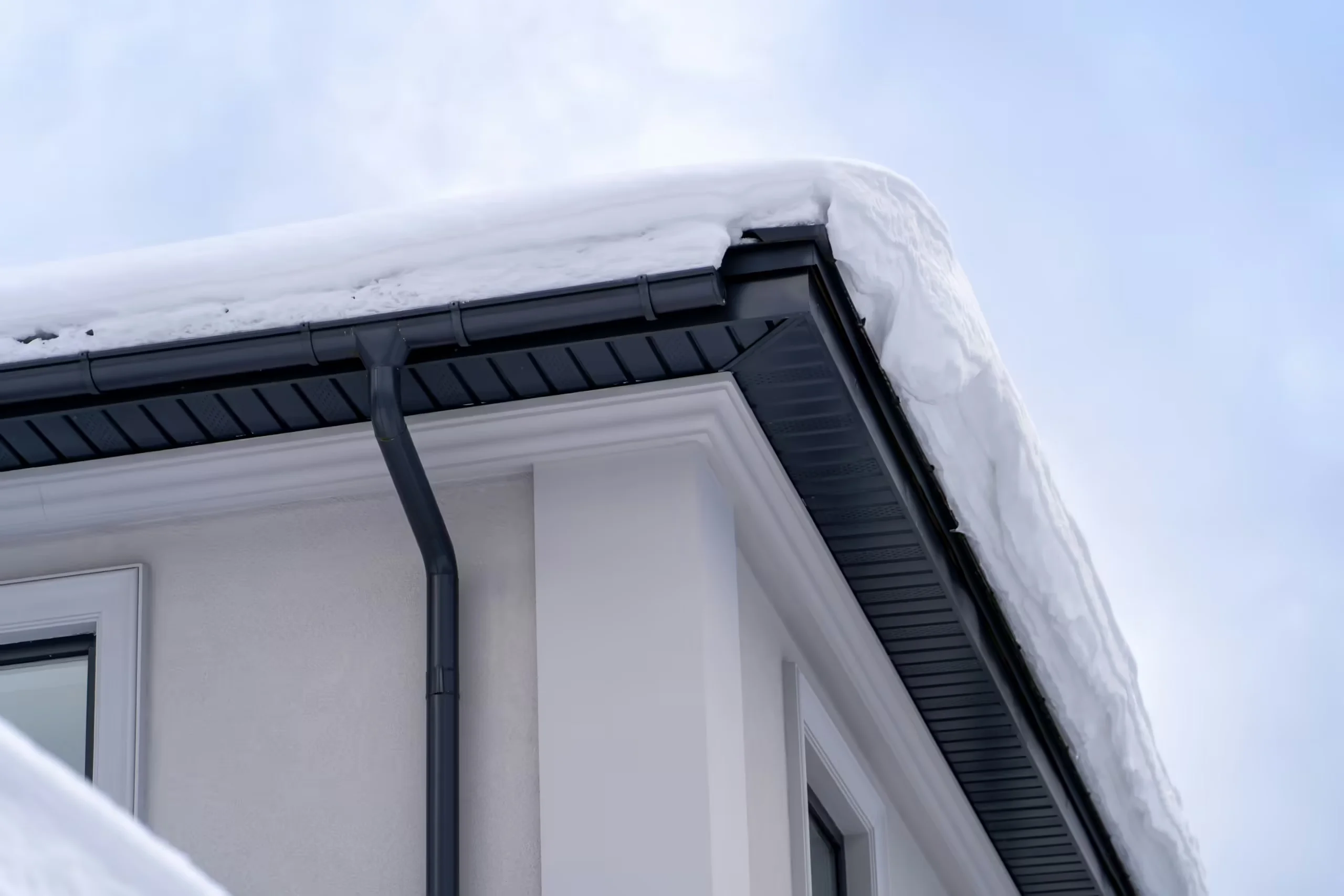
Most winter roof leaks aren't caused by snow sitting on shingles. They're caused by ice dams. Heat escaping from the attic melts the underside of the snowpack, the meltwater runs down to the cold roof edge, and it refreezes into a ridge of ice. That ridge traps the next round of meltwater, which backs up under the shingles and into your home.
Ice dams also punish gutters. The weight of the ice pulls gutters away from the fascia, bends hangers, and can tear sections off entirely. If your gutters sag or overflow after every winter, dam ice is usually the reason, and damaged gutters then feed water problems for the rest of the year.
Long term, ice dam prevention comes down to keeping the roof deck cold: sealing attic air leaks, adequate insulation, and proper ventilation so escaping heat doesn't melt the snowpack from below. Raking the lower few feet of the roof after big storms helps in the short term by removing the raw material dams are made from.
Yes, Roofs Can Be Repaired in Winter
Here's the part the question is really about. If your roof needs a repair, you don't have to wait for spring, and you definitely don't have to clear the snow yourself first.
Professional crews handle winter roof repairs all season long. We clear the work area safely with proper equipment and fall protection, make the repair, and leave the rest of the roof alone. Shingle replacement, flashing repairs, sealing around penetrations, and leak fixes are all routine winter work. Some materials need mild days for proper adhesion, so occasionally a permanent fix is scheduled around the forecast with temporary protection in place until then. Either way, water stops getting in now, not in April.
And to be clear about our approach: most winter roof problems are repairs, not replacements. We don't use a January leak to sell you a new roof. When a roof genuinely is at the end of its life, we'll show you why and handle the roof replacement as a certified Owens Corning installer, with the work backed by manufacturer standards. Full replacements are usually scheduled for a stretch of workable weather, with your roof protected in the meantime.
When It's an Emergency, Don't Wait
Sagging ceilings, active leaks, cracking sounds from the attic, or a visible dip in the roofline are not wait and see situations. Our emergency home repair team responds around the clock, including nights, weekends, and mid storm, to relieve dangerous snow loads, tarp damaged sections, and stop water intrusion before it spreads.
Damage from snow load, ice dams, and winter storms is often covered by homeowner's insurance. We handle insurance restoration projects regularly and can document the damage properly, work with your adjuster, and restore your roof the right way instead of patching over a claim.
Snow and Ice Don't Only Attack the Roof
The same freeze and thaw cycle that builds ice dams works on the rest of your exterior too. Meltwater finds its way behind cracked or gapped siding, freezes, expands, and pries the gap wider every cycle. If your siding is due for replacement, modern vinyl siding sheds water and shrugs off freeze cycles, while HardiePlank siding adds serious impact resistance against wind driven ice and debris.
Windows tell on themselves in winter too. Condensation that freezes on the inside of the glass, frost around the frame, or a draft you can feel from across the room all point to failed seals. Sometimes window repairs solve it. When the units themselves are done, replacement windows make a bigger difference in winter comfort than almost any other upgrade, and energy efficient vinyl window replacements are a strong value for the money. Professional window installations happen year round, one opening at a time, so winter is no obstacle. The same goes for drafty, warped entry doors, where replacement doors typically install in a single day.
Winter Roof Help Across Pennsylvania and New Jersey
RAM Roofing & Exteriors is headquartered in Doylestown, and our crews work through every month of the year. We serve homeowners across Bucks County, Montgomery County, Chester County, Delaware County, Berks County, and Lehigh County in Pennsylvania, along with Hunterdon, Warren, and Mercer County in New Jersey.
When winter storms roll through, we're taking calls from Warminster, Abington, King of Prussia, Conshohocken, Fort Washington, Phoenixville, Downingtown, Media, and everywhere in between. See the full list of service areas, and if your town isn't there, call anyway. We likely cover it.
Why Homeowners Trust RAM Roofing & Exteriors in Winter
- Complimentary roof inspections with detailed written estimates, so you know what's real and what it costs before deciding anything
- Honest, repair first recommendations. A winter leak is not a sales pitch for a new roof
- Around the clock emergency storm damage response, every day of the winter
- Fully licensed and insured in Pennsylvania and New Jersey (PA072883 and NJ 13VH11020800)
- A 4.9 star Google rating across more than 200 reviews. See what your neighbors say on our testimonials page
- Certified Owens Corning roofing installer, with work held to manufacturer standards
If a winter repair turns into a bigger project than you'd budgeted for, flexible financing options can spread the cost out. Learn more about how we work on our about us page, or find quick answers in the FAQ.
Frequently Asked Questions
How much snow can a typical roof hold?
Most modern roofs in our region are designed to carry a snow load of roughly 20 to 30 pounds per square foot. In practice, that means around 2 to 4 feet of dry snow or 1 foot or more of wet, saturated snow before the design margin gets uncomfortable. Ice counts heavily against that budget, since an inch of solid ice weighs about as much as a foot of dry snow.
Should I remove snow from my roof after every storm?
No. Routine snowfalls on a sound, pitched roof take care of themselves. Reach for the roof rake when accumulation passes about a foot, when the snow is unusually wet and heavy, or when ice is building at the eaves. Flat roof owners should be more proactive, since flat roofs hold everything they're given.
Can a roofer repair my roof while there's snow on it?
Yes. Crews clear only the work area using safe methods and proper fall protection, complete the repair, and leave the rest of the snowpack undisturbed. If temperatures are too low for certain materials to seal properly, the area is protected temporarily and the permanent fix is scheduled for the next workable window.
Does homeowner's insurance cover snow and ice dam damage?
Often, yes. Sudden damage from snow load, ice dams, and winter storms is covered under many standard policies, while gradual wear is not. Documentation makes the difference, which is one reason to have a professional assess the damage before anything gets cleaned up or patched.
Do heat cables prevent ice dams?
Heat cables melt drainage channels through ice at the roof edge, which helps manage symptoms in problem spots like north facing eaves and tricky valleys. They don't fix the underlying cause, which is heat escaping into the attic and melting the snowpack from below. Air sealing, insulation, and ventilation solve the actual problem. Cables are a supplement, not a cure.
Worried About Your Roof This Winter? Let Us Take a Look
Put the leaf blower down and stay off the ladder. If snow, ice, or a nagging leak has you worried about your roof, RAM Roofing & Exteriors will give you a straight answer about what's actually going on up there and what it will take to fix it.
Call or text (215) 315 - 7700 any time, day or night. We'll inspect your roof at no charge, put everything in writing, and if something needs doing, we'll do it safely, in winter, so you're not spending the season watching the ceiling.